

Forged in the Desert, Raised by the Sea (Embrace the Paradox That Built You)
The ocean in my blood and the desert in my bones: on contradiction, survival, and the multitudes that shape the wild edges of our becoming.

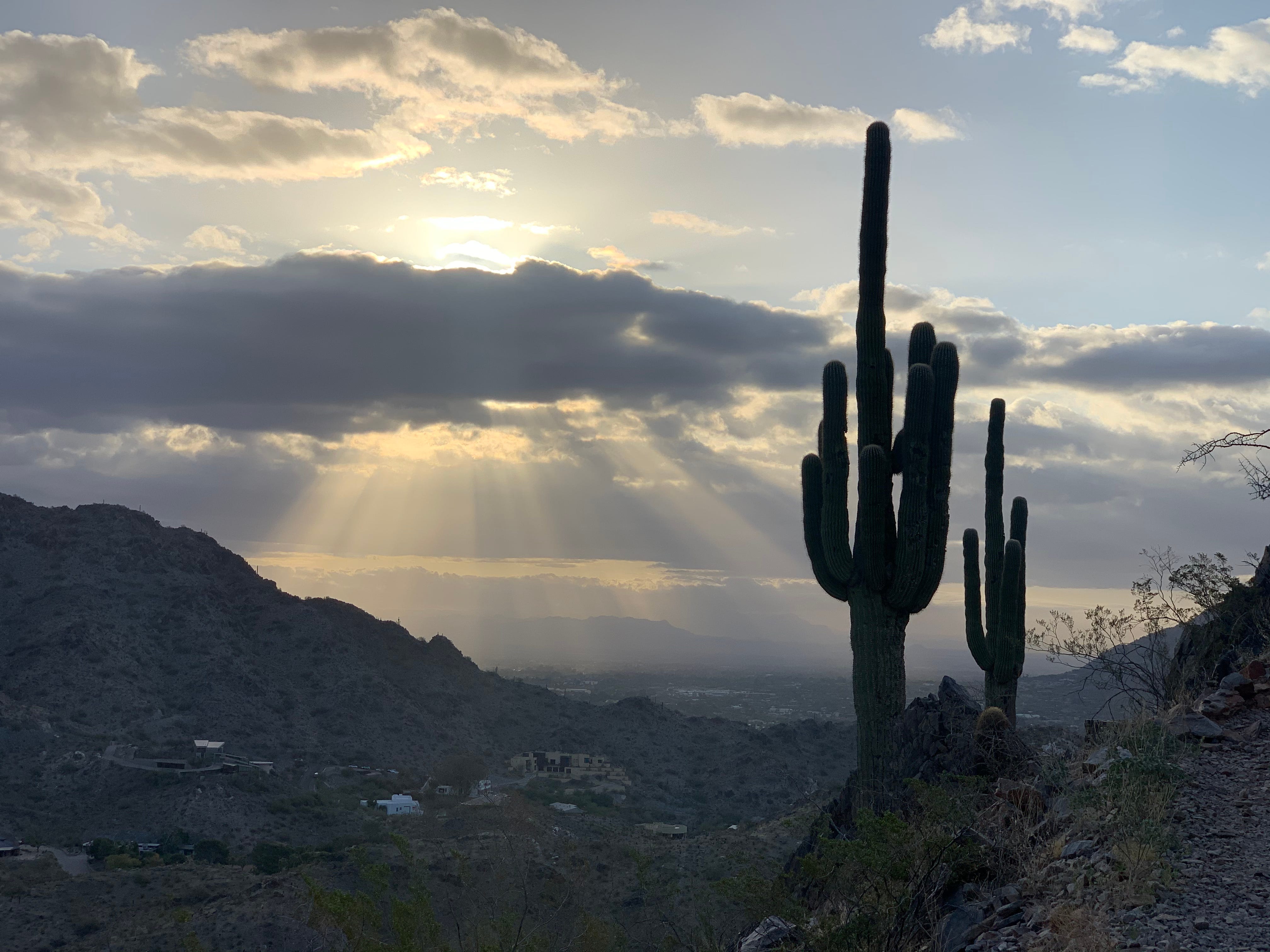
I get myself out to the desert often, and her hard-packed trails save me, again and again. I hike up to the summit at a fairly fast clip—muscle memory powering me despite the months away from the mountain, climbing so fast my demons can’t quite keep up.
But it’s the way down that I live for. When the decline evens out just enough to pick up the pace, my feet begin to fly, finding the just-right spots to land, trusting my own capacity for steadiness despite the uneven terrain.
I shouldn’t run, not the first time out, at least. I know this. My middle-aged knees know this. But part of me already knows I will. I always do.
I’ve got a playlist ready—a collection of songs with just the right cadence and a prominent downbeat to power my feet. The right music in my ears and I run faster and push myself harder, every time. After a while, the song itself filters into the background; it’s just the pulse of that beat fueling my legs as they cover ground on trails I know by heart.
I round a corner and lift my head. The rough patchwork blanket of jumping cholla, barrel cacti, and prickly pears gives way to a sparse forest of ocotillo and saguaro, rising against that endless blue sky. Ahead of me is a mountain vista layered in light and shadow. I am deep in the Sonoran, surrounded by a habitat evolved for survival in a land nearly devoid of water.
This desert, she has played muse to me for many years. Hers is a melding of brittle and the sort of bravado a place or soul only reaches when they know they contain the building blocks necessary to sustain life under the most impossible of conditions.
Some places carry the souls of people. Some people, the souls of places. The parallels are not lost on me here.
Then, with my brain on its continual spin of meaning-making that marks it the mind of a writer, for the first time in a mile or so, I actually hear the music in my ears and laugh out loud.
There I am, out there in the middle of the desert, feet pounding bone-dry earth, not to hip hop or some high-energy pop song, but to the tune of a sea shanty from my childhood. A song that every single Maritimer knows, as if we were born with it imprinted in our bones.

You see, I come from a land of people who made their living (and their lives) on the ocean. A family tree full of fishermen, sea captains, and master builders of tall ships that sailed the globe on the power of a good sail, a strong wind, and a steady crew. The land of Captain Kidd’s infamous Oak Island treasure, and the final resting point for many of the bodies recovered from the Titanic’s icy grave.
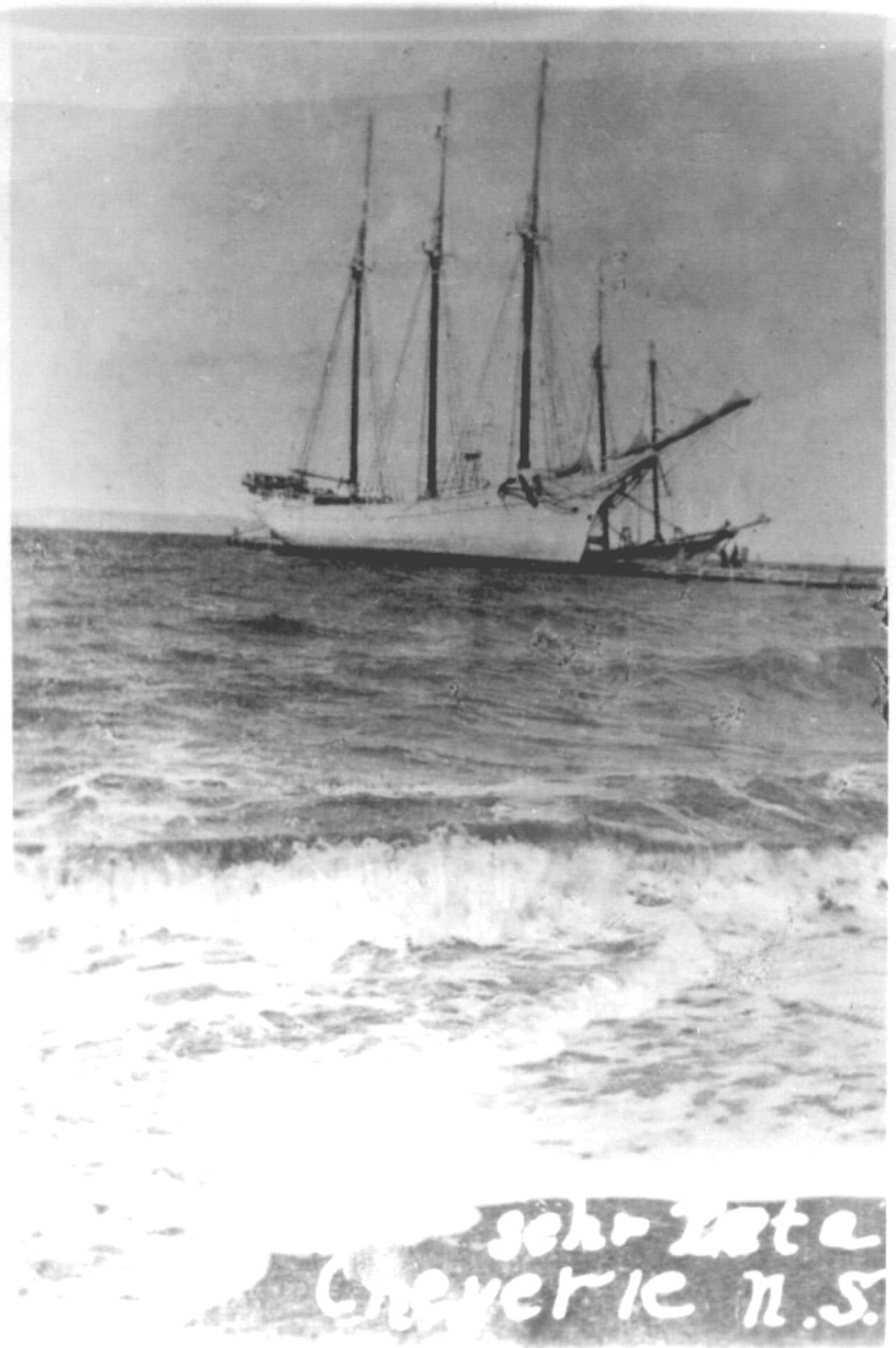

We are all, of course, mostly made of saltwater, but I am, you see, both of and from the sea.
I am born of the blood of those who crafted the ships, raised the sails, navigated the oceans—those who traveled the world on the water and those who waited at home. For the first 23 and a half years of my life, I lived within easy footfall of the Atlantic.
One day in the early 2000s, midway through my pregnancy with my second child, I stood on the bow of a catamaran off the coast of Kauai, hearing another sea shanty in my head. It was a planned group whale watching expedition, but we were forced to turn back because the sea was having her own way (which is what the sea usually does).
The rest of those on the boat? Safe below deck, including my then husband, puking his sea-sick guts up off the back of the ship. But me? I was out on the bow. Red bikini, two pigtail braids, and my five-month pregnant belly. I held the rail as the craft rode those swells, legs spread wide, stance strong and steady, in my absolute glory the entire way.
Later, I disembarked to find I was actually crusted with dried white salt, skin, hair, and all. This happened again while kayaking on rough waters outside San Diego with another partner, and on the ferry from Cozumel to the mainland with yet another. Those I loved huddled inside, bent over, trying to keep from losing their lunch, while I made my way to the front of the ship, the music of the sea playing not in my ears but straight from my bones. After each of these trips, I returned home to the desert, and she held me well, but I never stopped hearing the music of my East Coast home
The woman I am is a product of the Scottish and Irish roots of my Nova Scotian and Newfoundland upbringing. Shanties and fiddles and bagpipes the backdrop to, as my dear friend Kate Inglis describes it, the roar of “a meat grinder sea”.
“But as soon as you get off the plane in Nova Scotia—even at midnight, stinking with travel, fall-down tired—you walk through a revolving door at the airport and inhale pure, wet salt. This is the stuff we are made of. Your body and all your instincts like it. Gives you a wee smack. Time of year or temperature doesn’t matter. It’s ancient rock and salt and tides. Ocean’s burp. It’s not fancy, and the air’s got no airs. But this kind of wildness is beneficial for the soul. Drink it in.”
Kate’s words remind me that the sea is contradiction embodied—both ruthless and sustenance, brutal and beloved. This is the inheritance I carry: to love a thing that could crush me, to belong to a place defined by its unpredictability.
There is no separating the Maritimes from the bones of me. From how I exist in and see the world around me, to the cadence that sometimes still escapes on the lilt of my voice. I am the daughter of that red-clay shore, where the engine of the highest tides in the world carries in and out a volume of water that exceeds that of every last river in the entire world, twice each day.
I don’t have to find my sea legs when I am on the ocean, because this is where I belong. There is no happiness greater for me than to be on the water, it is true.
And yet, there is no healing quite like the one I find under the blaze of the Sonoran sun. I am a daughter of the desert too, you know.
I was raised by the ocean, you see, but forged under the fire of the unrelenting desert sun. My life, nearly half a century in now, has been split between the two extremes. As deep as the ocean runs through my veins, I have been equally formed under the baking heat of the Sonoran. And, for all her inhospitable glory, she has taught me more about the nature of beauty and the tenacity of strength than anything soft and yielding ever could.
We are all a product of a thousand paradoxes and contradictions, it seems, puzzle pieced together haphazardly, making little sense to most, but every bit of sense to the multitudes within us and the tenuous peace they have made with each other.
Sea Shanties and Saguaro seem unlikely bedfellows, but here, in me, they splice together as if they’ve always yearned to intersect on a day like today, in the inner territory of a middle-aged woman running through the desert, making her own tenous peace with all the patchwork pieces of her own becoming.

That run was a few years ago now. Several nights before that day, my then new lover shared a story. A brutal story. Of the ways that those who should have protected her brought hurt to her body and heart. A time when her young self met harm where she should have only found haven. She told this story from a distance, with humor that could have brought a room down with laughter. My deep-feeling soul didn’t understand—jokes in the middle of the pain catching on the edge of something hard deep inside of me, none of it landed right.
Yes, she said, I’ve learned to tell funny stories about hard things. It is why I am still here. It is how I survived.
We were still in the early days, the two of us, in that space of constant discovery known to all new lovers. We laughed frequently then, as much as we do now. There was an ease between us, a curiosity about what would become. But even that early, I was aware of the particular blend of brittle and bravado that edged easily into her voice and body, and I didn’t quite know what to make of it.
Back then, I knew little of the cage that trauma had built from her bones.
Returning To The Cage (To Find A Better Way Out).

This journal is a fully reader-supported publication. The best way to support my work is to buy my book, purchase some of my art (and other swag), or become a paid subscriber here and help me to keep my writing alive and flowing for everyone.
So that day, I didn’t get it. Couldn’t metabolize the humor-in-trauma that came so easily to her. It was too jarring, too jagged-edged and sharp-cornered against all the softness in me. And because I didn’t get it, because I couldn’t possibly wrap my brain around it, I did not receive her retelling as vulnerability, as bravery, as a very tender piece of her very human story.
My softness is a natural habitat, you see. Nature and nurture, the product of folk for whom even-keel-steady-as-she-goes exists as the ultimate emotional set point. When I push up against a hard edge, I turn away, fold in, afraid of what lies behind the sarcasm and bite.
So, I missed an opportunity to create connection, and leaned hard into the divide between us instead.

For some people and places—like my lover, and this adopted desert home of ours, survival demands hardness. Toughen up, shore up your defenses. Cactus spine your backbone, needle up your skin, send your roots down real deep, and pray you can hold out until the rains come.
Strength in the desert is easy to see; it’s the welcome you have to pause and wait for.
Others, like me? We yield like sea glass and driftwood, like the crumbling of shores eroded against the steady push of the sea. We bend into the break in the hopes that we won’t break at all.
Spoiler alert: we break often, and easily, until you can see our insides, sharp and raw. Then we get tossed about by the current again, rough edges polished once more, honed down by force into something even more delicate but no less strong.
3300 miles between the two habitats that built me, and a whole different language for the ways we survive.
But out in the desert that day, sweat pouring down under the shadow of a 250-year-old saguaro, suddenly it made a different sort of sense.
“We humans are structurally made of contradictions, living peacefully, sometimes painfully, with our oxymoronic selves.”
—DAVID BERLINER
The macabre humor of those with the deepest trauma.
My insistence on claiming religious language to speak of my own subversion.
The sovereign goddess who finds control in the most deviant of surrender.
The cruelty of the kindest hearts when pushed to their limits.
The way I’m a downtown girl who loves the backwoods twang of country music most.
So, she’s tough and harsh, and I’m tender and gentle? Nah.
Our insides don’t subscribe to binaries like that.


The delicacy of the Queen Anne’s Lace, with her feral purple heart, growing wild by the roadside in Nova Scotia. She’s adapted to drought in a land of rain, belies its hardy tenacity, and has a history of aiding women who wished control over their own bodies.
The dry season prickly poke of grandmother Creosote, who nurses with her many-thousands-of-year-old clonal colonies, doesn’t prepare you for the velvet of its flowers or the feathery puff of seeds, or the earthy sweet of her hanging on the desert after every rain.
And my love and I? Well, we’ve both survived what would have felled less hardy stock. We’ve both been brought to our knees by a simple kindness granted when least expected. Soft and strong are not mutually exclusive experiences, not in what grows from the soil, and not in what grows from our hearts.
Some of us can stand in the desert sun without shriveling, Others can brave the swell of a storm tide without anchoring down. But some, given enough time and willingness to learn a new way, miraculously figure out how to do both.
Perhaps not flawlessly, unlikely without some awkward fumbling, but yes—we have room in us for unlikely juxtapositions, and we are, as Neil DeGrasse Tyson says of the universe, “under no obligation to make sense”.
We are all composed of countless fault lines running haphazardly through our centers, pushing the various bits of us up against the next, creating beauty and tension both. A product of who we were born, what happened to us along the way, and the miracle and magic we’ve managed to make of that.
“Do I contradict myself? Very well then, I contradict myself, I am large, I contain multitudes.”
— Walt Whitman

We don’t question these multitudes when encountered in the natural world—we know the universe is large enough that at some of what we encounter will defy understanding or comprehension. That occasionally in the wild, the component parts don’t seem to add up to the whole of the story, or perhaps, more often, they add up to even more.
We meet these wild contradictions with wonder and awe and a sense of reverence.
And we don’t have to traverse to opposite edges of the continent to see multitudes at work.
In the rich, warm waters off Florida’s coast, where red mangroves drink the salt of the sea and manatees rise for air, two radically different survival systems thrive side by side—one rooted, one roaming. Each dependent on the same ecosystem, each quietly sustaining the other.
The mangrove, rather than seek the earth for fresh water, pulls salt from the sea while anchored in brackish stillness. The manatee drifts on warm currents, needing air and movement to survive. A land plant that reaches down to drink ocean water, and an ocean animal that relies on rising for air? Go figure. Entirely disparate survival systems, what could they possibly share?
But below the surface, the mangrove survives by filtering what would poison most plants, offering oxygen and shelter, slowing the tides, while the manatee grazes on the production of its living, balancing the ecosystem and fertilizing the environment, while keeping its own belly full.
Contradiction doesn’t always cancel connection, you see—sometimes it makes it possible.
We marvel when, after a long anticipated monsoon, the desert blooms overnight—an unruly riot from hard-packed earth, an uprising of yellows, oranges, and purples, from brown to verdant in the blink of an eye.
We accept that ancient glaciers detach and travel to warmer waters, melting along the way to become one with the sea. Climb high enough up a mountain and you’ll encounter gritty remnants of winter snow, even on a hot summer day.
We accept paradox in the landscape without a second thought: the cactus that pierces and nourishes, the tide that destroys and renews. We know, without question, that a place can be scorched and sacred, lush and lethal.
In nature, contradiction is beauty—drought and bloom, erosion and creation, death and regeneration. We accept that the land holds multitudes. Yet somehow, we struggle to offer that same reverence to ourselves and to each other.
It’s so easy, in relationship, to deny the inherent multiplicity of life itself, expecting humans to be more predictable, to follow the rules of engagement, to make perfect damn sense.
Faced with the multitudes in ourselves or in another, we tighten and brace. We want clarity where there is only complexity, neat edges where there is only an impossible tangle.
We yearn for coherence from others, don’t allow the same tendency toward entropy and disorder we freely grant the natural world, as if we could ever separate ourselves from that which holds and sustains us.
We forget, so easily, that we, too, contain multitudes.
We do this to ourselves, swinging to reject the spaces we’ve been told don’t make sense, denying this bit, holding another captive, desperate to coax that confusing part down far enough nobody will ever notice.
Other times, we fight to protect our own contradictions, even if we don’t understand them or even particularly like them, determined to hold on to what we can’t articulate, what doesn’t seem to fit, but which we know is innate and personal and true.
Sometimes, it seems, we make a very messy attempt at managing both at once.
Was I deeply in love with my ex-husband, and also entirely and resolutely queer, yes, I was.
Did I reject that queerness, turn my back on it, and sweep it under the rug and back into the closet for 32 years? Yes, I did.
Could I make sense of that? Not for a very long time. Not at all, until one day I was forced, in the most brutal way, to acknowledge the inexplicable paradox of it all.


Whether we go to battle to protect our own contradictions or wrestle to keep them tamed, we so often outright reject those same wild edges of complexity in those we love, refuse to acknowledge or open to them, simply because they don’t mirror our own.
Wouldn’t it just be so much more neat and tidy if all the other humans acted in accordance with our understanding and expectations?
(And by that I mean, wouldn’t it be easier if she were just like me?)
Wouldn’t it be simpler if her ways of being and living, her mode of speaking, communicating, and interacting with the world made sense on my terms and on my timeline? Wouldn’t it be better if I could analyze her choices as defined by the rulebook of my own lived experience, and as decreed by my own patchwork assembly of contradictions and complexities.
How very cute of me to think that. How cute of all of us. Adorable, we can be, in our stubborn insistence that our understanding is the singular measure of value, truth, and propriety.
And then, we just as quickly turn our weapons back on our own tender flesh, we often do so because we fail to honor those very complexities in our own lived experience. We humans, to the last, are a wholly confusing, entirely brilliant jumble of beliefs, behaviours, programming, and experience. And, guess what, a whole hell of a lot of it doesn’t make sense—sometimes not even to ourselves.
Sure, maybe a few random souls have had utterly mild and predictable lives—lived experiences untouched by the devastation of trauma or arbitrary plot twists or unexpected brilliance or a million imperceptible shifts of current along the way.
But not most of us. Certainly not me. Not my love. I imagine not you, either.
Most of us, when fully revealed, are utterly confusing, entirely paradoxical, an absolute mishmash of juxtapositions and layers, and—at least on paper—would appear to make no sense at all.
A fuck ton of very confusing multitudes, every last one of us.
This being human thing? Its an erratic ride, and we humans are perpetual experiments with entirely unpredictable outcomes. Enigmas to the end. That’s why we have to look deeper, wider, and with a whole lot more nuance and compassion.
At ourselves, and at each other.
We are point and counterpoint. Oil and water. Oppositional polarity, north and south, rotating and revolving the whole damn time. We love across fault lines, across incongruity, ropes pulled taut across the chasm of divide.
In the brilliant love poem In Landscape, my friend Buddy Wakefield says, “I know our story may look like octopus ink to the rest of the breath in this world”, and I think he got it right. A smokescreen and decoy, unintentional or not, that prevents everyone else from seeing us clearly, all nine of our brains and all those waving arms. But the ocean is big, y’all. And sometimes, you just have to let the dark cloud disperse for long enough to see clearly again.
It’s the real terrain of devotion, staying long enough for your field of vision to open up, for the desert to show you her softness, for the ocean to change the shore.
Multiplicity is the wilderness in which we must choose to reside if we wish to make relationships work. To seek complexity and stay steady with it, we must learn the many languages of multitudes, bear witness to those multitudes in another, and try to translate as best as we can.
To build a home in my body with room for the desert and the sea, I must embrace the ambiguity of a feral sort of paradox, resist the urge to tame them into concrete palatability.
We have room to hold joy and grief in the same breath. Anger and hilarity. A single person can be both balm and blade. A single story, tragedy, and comedy.
There is something holy in allowing ourselves to be witnessed, and something equally holy in pushing past all that stands in the way to bear true witness ourselves, without attempting to force anything to make sense. To love someone in all their glorious contradictions, while finally learning to stop exiling your own.
Healing and repair don’t rely on the resolution of every sticky riddle, but on the integration and celebration of them all, to mark each nonsensical paradox as coordinates on our own map of becoming. It is the invisible work of translation, of saying, in the language of words, or music, or the body, you make so much sense to me.
It is to live, like me, with the fireball of a desert sun in one hand, and saltwater in the other. To pray to gods we stopped believing in, just in case they still believe in us.
And I thought then, as I neared the end of my run, about how the warm-up to her frequent laughter—even in response to the most fucked up of things—mysteriously sounds like the steady hum of a constant, inevitable sea. Mine, by contrast, is more like rainfall in the desert: rare and reluctant, but when it comes, it opens the heavens in a deluge that can fill the whole earth.
It was still way too early to know what would become of our story, how our multitude may learn to dance, but in that moment, as the sun slipped below the horizon line, I had learned what I came here to know.
I threw my head back and laughed out loud under the saguaros; those towering giants who had already stood uncomplaining sentry over the trail for hundreds of years and through more droughts than I could count. I marveled at all we’d already survived, determined to go home and tell her, that for all the vast differences, are are both, somehow, mainly made of water.
Sebastián Marroquín remembers his father singing lullabies while he drifted off to sleep—and his father was the drug lord Pablo Escobar, the greatest killer in Colombian history. Living a contradictory life is profoundly, perhaps definitively, human.While most humans struggle to maintain a sense of psychological unity, contradictions produce destabilizing breaches in the self. Whether conscious or unconscious, these fissures nourish creative inspiration, which can be interpreted as a way to resolve or sublimate internal oppositions. I believe this can be said of all domains of creation. Perhaps art, literature, science, or philosophy wouldn’t be possible without intrapersonal contradictions and the desire to resolve them.
Permission ; Granted is a reader‑funded, affiliate‑free space for humans who love language, creative sovereignty, myth‑rich memory, and the raw truths of becoming. I’m Jeanette LeBlanc, queer author, word‑witch, Creative Sovereignty Writing Coach, and author of You Are Not Too Much.
Stuck on a writing, creativity, or life dilemma? Send it to Uncommon Sense—my advice column for bold hearts.
Subscribe to read the full archive, or Gift a subscription to someone who needs the words. Thank you for being here, your support is a gift beyond measure.
The desert hasn’t depleted your salt. 🤙🏻